Due: Mon, Mar 25th in class Late assignments will be penalized 20% per day.
Book Questions from Introduction to Algorithms - 4th ed.
14.1-2, 14.1-3
14-4 (10 points)
15.1-4 (10 points)
Hints:
14.1-2 - Consider the following rod pricing table
length 1 2 3 4 price 1 20 33 36 Compute the density pi/i for each length, determine the greedy solution and compare it to the optimal solution.
14.1-3 - Consider how to modify BOTTOM-UP-CUT-ROD to incorporate the per cut cost (and the case where no cut is made).
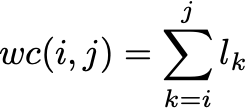
14-4 - This problem is tricky (as if any dynamic programming problem isn’t). To start, define a quantity wc(i,j) as the count of the total number of characters in words i through j.
Then we can compute the number of extra spaces at the end of a line of length M that contains words i through j as es(i,j) (note es(i,j) may be negative if the words are longer than the length of the line, i.e. the words don’t fit on the line)
Then per the problem description, the cost of a line lc(i,j) is given by
where the first case precludes solutions where the words don’t fit, the second case accounts for the last line, and the third case is the cubic cost function specified in the problem.
Let the optimal cost for n words be c(n) and give a top-down recursive formula for c(n) by taking one-step-back and starting the last line with word i.
Then show optimal substructure for the recursion and give a bottom-up implementation.
15.1-4 - We have discussed the activity scheduling problem for the case of maximizing the number of activities for a single lecture hall. Consider how to use this strategy to schedule each activity in the minimum number of halls. There is a straightforward approach which produces an O(n2). Extra Credit Try to find a better solution utiizing a stack for available lecture halls and priority queue for currently used lecture halls to solve the problem in O(n lg n) time (consider sorting both start and finish times). Remember you must prove (at least intuitively) that your approach produces an optimal solution and consider the runtime of the data structure operations in your asymptotic analysis.